Lead Magnet Funnel: A Complete Guide to Building One That Converts
A lead magnet funnel captures emails and turns strangers into subscribers. Here is how to build one that actually converts.
Lead Magnet Funnel: A Complete Guide to Building One That Converts
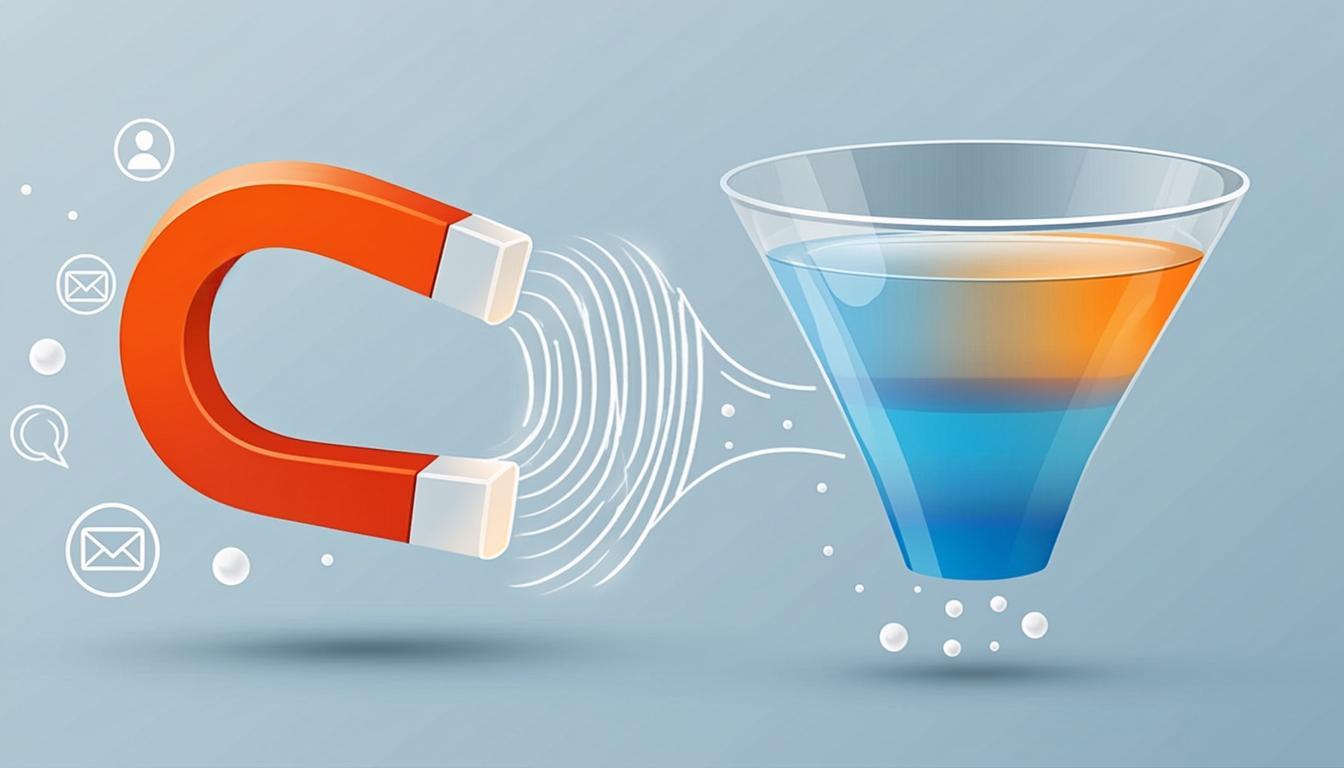
A lead magnet funnel is the most effective way to grow your email list with qualified subscribers. It offers something valuable for free in exchange for an email address, then nurtures those subscribers into customers over time. This guide covers everything you need to know about building a lead magnet funnel that actually converts, from choosing the right lead magnet to designing the landing page to writing the nurture sequence.
After building lead magnet funnels for over 40 brands across 12 industries, we have identified what works and what does not. The principles are the same regardless of your industry. The execution is what matters. A well-built lead magnet funnel can capture 30 to 50 percent of visitors as email subscribers, compared to 2 to 5 percent for a generic signup form.
What is a lead magnet funnel?
A lead magnet funnel has 4 parts: the lead magnet (the free thing you give away), the landing page (where visitors sign up), the thank you page (where they get the lead magnet), and the nurture sequence (the emails that follow). Each part has a specific job, and together they turn a stranger into a subscriber and then into a customer.
The lead magnet is the hook. The landing page is the pitch. The thank you page is the delivery. The nurture sequence is the relationship. Skip any one of these and your funnel will underperform. Build all 4 well and your funnel will outperform 95 percent of what is out there.
Step 1: Choose a lead magnet that people actually want
Your lead magnet is the foundation of your funnel. If nobody wants it, nothing else matters. The best lead magnets solve a specific problem for a specific audience. They are not general guides or vague resources. They are targeted solutions to targeted pain points.
- Templates and swipe files. Done-for-you templates that save time. Examples: email subject line swipe file, landing page template, social media calendar template.
- Checklists and cheat sheets. Condensed, actionable steps for a specific task. Examples: 27-point email deliverability checklist, 10-step launch checklist, SEO audit cheat sheet.
- Free tools and calculators. Interactive tools that provide immediate value. Examples: email ROI calculator, funnel conversion calculator, keyword density tool.
- Mini-courses and video trainings. Educational content delivered over 3 to 5 days. Examples: 5-day email marketing mini-course, 3-part funnel building training.
- Quizzes and assessments. Interactive content that provides personalized results. Examples: marketing maturity assessment, funnel health quiz.
The key is specificity. A guide called Email Marketing Tips will not convert. A guide called 27 Email Subject Lines That Generated Over 1 Million in Revenue will convert. The more specific the promise, the more valuable the lead magnet, and the higher your conversion rate.
Step 2: Design a landing page that converts
Your landing page has one job: capture the email. Everything on the page should serve that goal. The headline should make a specific promise. The subheadline should explain the value. The bullet points should highlight what is inside. The call to action should be obvious. And there should be nothing else on the page to distract the visitor.
- Headline: Make a specific, measurable promise. The 27-Point Email Deliverability Checklist is better than Free Email Guide.
- Subheadline: Explain the value in one sentence. Fix your deliverability issues and get your emails into the inbox.
- Bullet points: List 4 to 6 specific things inside the lead magnet. Use benefit-driven language, not feature-driven.
- Opt-in form: Ask for name and email only. Every additional field reduces your conversion rate.
- Call to action: Use action-oriented button text. Get the Checklist is better than Submit.
- Social proof: Include testimonials or subscriber counts near the form. Join 4,000+ marketers who already downloaded this.
Step 3: Build a thank you page that delivers and upsells
The thank you page is where the subscriber gets their lead magnet. But it is also an opportunity. This is the moment of highest trust. The subscriber just gave you their email and you delivered on your promise. They are primed for a soft offer.
The thank you page should do 3 things: deliver the lead magnet (via download link or email confirmation), tell the subscriber what to expect next (check your inbox for the first email in 5 minutes), and make a soft offer (a relevant product, a free call, or a next-step resource). The soft offer on the thank you page can convert at 5 to 15 percent, adding immediate revenue to your funnel.
Step 4: Write a nurture sequence that converts
The nurture sequence is the email series that follows the lead magnet delivery. Its job is to turn the new subscriber into a customer. The sequence typically runs for 5 to 7 days and includes 5 to 7 emails, each with a specific purpose.
- Email 1 (Day 0): Deliver the lead magnet and set expectations for what is coming.
- Email 2 (Day 1): Tell your story. Build the relationship.
- Email 3 (Day 2): Deliver value. Prove that being on your list is worth their time.
- Email 4 (Day 3): Show social proof. Share testimonials and case studies.
- Email 5 (Day 4): Make a soft offer. Frame it as a natural next step.
- Email 6 (Day 5): Handle objections. Address the main reason someone would not buy.
- Email 7 (Day 6): Final push. Give a reason to act now.
A lead magnet funnel is not just about capturing emails. It is about starting a relationship. The lead magnet is the hook, the landing page is the pitch, the thank you page is the delivery, and the nurture sequence is the relationship. Build all 4 well and your funnel will outperform 95 percent of what is out there.
How to measure your lead magnet funnel
The success of your lead magnet funnel comes down to 3 metrics. The opt-in rate (what percentage of landing page visitors subscribe), the nurture completion rate (what percentage of subscribers open all emails in the sequence), and the conversion rate (what percentage of subscribers buy by the end of the sequence). A good lead magnet funnel will have an opt-in rate above 30 percent, a nurture completion rate above 50 percent, and a conversion rate above 5 percent.
If any of these metrics are below benchmark, you know where to focus your optimization. Low opt-in rate means your landing page or lead magnet needs work. Low nurture completion means your emails are not engaging enough. Low conversion means your offer or your nurture sequence is not persuasive enough.
The bottom line
A lead magnet funnel is the most effective way to grow your email list with qualified subscribers. Choose a specific, valuable lead magnet. Design a landing page that converts. Build a thank you page that delivers and upsells. And write a nurture sequence that turns subscribers into customers. If you do these 4 things well, your funnel will generate a steady stream of qualified leads and customers for years to come. If you need help building or optimizing your lead magnet funnel, our sales funnel services include lead magnet strategy, landing page design, and nurture sequence copywriting.
Keep reading
Ready to put this into practice?
Book a free 30-minute audit. We'll look at what you're doing now and tell you honestly whether we can help.